
Tech and AI Stock Market Report for August 2, 2026: Amazon and Microsoft Lead as Apple Breaks Down
Price snapshot: U.S. markets were closed when this report was prepared on Sunday, August 2, 2026. Prices and session ranges below are delayed regular-session data from Friday, July 31, 2026. Scenario zones are based on recent public price action and are not guaranteed support or resistance.
The technology market ended July with a selective risk-on message rather than a broad all-clear signal. The Nasdaq Composite rose about 1.0% on Friday and the S&P 500 gained about 0.7%, but earnings reactions were sharply divided. Amazon surged after AWS growth accelerated, Microsoft extended its post-earnings breakout, and Alphabet rebounded as investors focused on cloud monetisation. Apple fell more than 7% after its forward outlook and supply commentary disappointed.
The central debate has changed. Investors are no longer asking whether artificial-intelligence demand exists. Cloud growth at Amazon, Microsoft and Alphabet, together with strong advanced-chip demand, provides substantial evidence that it does. The harder question is whether revenue, margins and free cash flow can rise quickly enough to justify unprecedented capital expenditure, depreciation, power consumption and financing needs.
There are no A-rated setups in this report. The highest-quality earnings winners are extended after large gaps, while the cheaper-looking names still carry unresolved business, policy or price-structure risk.
Market backdrop
Three forces are likely to shape the next few sessions:
- Cloud growth is validating part of the AI spending cycle. AWS growth accelerated to roughly 37%, Azure grew about 43%, and Google Cloud recently expanded about 82%. That supports demand for NVDA, AVGO, AMD, TSM and ASML.
- Price extension is now the main risk in the strongest names. AMZN and MSFT delivered exceptional earnings reactions, but large gaps create poor entry asymmetry if buyers chase before consolidation.
- Rates remain a valuation headwind. The Federal Reserve held its target range at 3.50%–3.75% on July 29, with three policymakers dissenting in favour of a hike. Higher long-term yields can pressure even companies with strong earnings.
Compact watchlist
| Ticker | July 31 close | Day move | Current status | Short-term read | Grade |
|---|---|---|---|---|---|
| AAPL | $308.91 | -7.35% | Post-earnings breakdown | Strong quarter, but supply constraints and softer guidance damaged the immediate structure | Avoid |
| NVDA | $200.75 | +2.99% | Rebound near breakout resistance | Hyperscaler spending supports demand, but export controls and sector volatility remain | B |
| MSFT | $464.72 | +3.02% | Extended earnings breakout | Azure and AI monetisation are strong; entry risk is elevated after a historic repricing | B |
| AMZN | $271.58 | +15.32% | Major earnings gap | AWS acceleration improved confidence in AI capex productivity, but cash-flow pressure remains | B |
| TSLA | $311.21 | +0.76% | Volatile consolidation | Autonomy remains a catalyst, while margins, cash flow and execution keep the setup fragile | Avoid |
| GOOGL | $356.13 | +6.71% | Strong rebound | Cloud and Search growth are excellent; capex and negative quarterly free cash flow remain concerns | B |
| META | $556.71 | +3.23% | Relief rebound after earnings weakness | Advertising remains strong, but spending, legal charges and guidance uncertainty limit conviction | C |
| AVGO | $389.28 | +0.39% | Neutral consolidation | AI networking and custom-silicon demand remain intact; customer concentration and valuation matter | B |
| AMD | $476.15 | -1.93% | Wide, unstable range | Data-centre momentum is strong, but price discovery remains too volatile for an A-grade setup | C |
| ORCL | $129.87 | +1.80% | Volatile recovery attempt | Cloud backlog supports the story, while financing and free-cash-flow questions remain unresolved | C |
| TSM | $404.25 | +0.26% | Stable but range-bound | Advanced-node demand and margins remain strong; geopolitics and export policy cap the grade | B |
| ASML | $1,629.00 | -1.23% | Pullback after guidance strength | AI lithography demand is strong, but China restrictions and rich expectations remain material risks | B |
Top 5 technology and AI market developments
1. Amazon changed the AI-capex conversation
Amazon reported approximately $200.6 billion in quarterly revenue, while AWS growth accelerated to roughly 37% year over year, its fastest pace in more than four years. The stock rose more than 15% on Friday because investors interpreted the stronger cloud growth as evidence that heavy infrastructure spending is producing measurable demand and operating leverage.
The bullish interpretation is straightforward: AI workloads are increasing cloud consumption, and AWS remains one of the strongest platforms for monetising that demand.
The bearish interpretation is also credible. Amazon expects exceptionally high 2026 capital spending, free cash flow remains under pressure, and reported earnings included a large non-operating gain related to its Anthropic investment. The market is currently rewarding growth, but tolerance could reverse if AWS slows while capex stays elevated.
2. Microsoft showed that strong AI demand can coexist with improving efficiency
Microsoft reported Microsoft Cloud revenue of about $59.3 billion, up roughly 27%, while Azure growth reached approximately 43%. Management also highlighted internal models, custom silicon and platform optimisation as tools for improving AI economics.
The result produced a historic one-day increase in Microsoft’s market value, followed by another 3% gain on Friday. The business signal is bullish: enterprise demand remains strong, capacity is converting into revenue, and Microsoft’s recurring software base provides a cushion.
The trading signal is less clean. After a rapid two-session repricing, the stock is vulnerable to profit-taking even without a deterioration in fundamentals.
3. Apple beat the quarter but lost the guidance battle
Apple reported fiscal third-quarter revenue of about $109.4 billion, up roughly 16%, supported by strong iPhone and Mac demand. However, management guided to September-quarter revenue growth of around 9%–11%, below the market’s higher expectations, and warned that component constraints could become more significant.
Services growth also failed to fully satisfy elevated expectations. The stock’s 7.35% decline shows that a strong backward-looking quarter was not enough to offset softer forward visibility, possible memory-cost pressure and supply risk.
The bull case is that the selloff may eventually create a better valuation entry if demand stays healthy. The bear case is that the gap lower reflects a genuine change in expected growth rather than a temporary emotional overreaction.
4. Alphabet and Meta show why AI monetisation and AI spending must be judged together
Alphabet recently reported about 82% Google Cloud growth, strong Search growth and a cloud backlog near $514 billion. The business case is powerful, but management also raised expected 2026 capital expenditure to roughly $195 billion–$205 billion, while quarterly free cash flow turned negative.
Meta reported approximately 28% revenue growth, supported by higher ad impressions and pricing. AI is clearly helping recommendation systems and advertising performance, but costs rose sharply and the quarter included substantial legal charges.
Public investor commentary remains divided. Bulls argue that cloud, advertising and enterprise demand are already creating a visible return on AI investment. Bears argue that the sector is becoming more capital-intensive, with cash returns increasingly dependent on continued high utilisation and pricing power.
5. Semiconductor demand remains strong, but rates and export policy can override it
TSMC’s latest results showed strong advanced-node demand and exceptional margins. ASML raised its 2026 sales outlook and announced capacity expansion to address demand for leading-edge lithography. Those facts support the multi-year AI hardware cycle.
The near-term risks are less about current orders and more about policy and valuation. NVDA and AMD remain exposed to U.S.–China export restrictions, while TSM and ASML face geopolitical and customer-access risk. Rising Treasury yields can also compress semiconductor multiples even when revenue forecasts remain intact.
Bullish versus bearish sentiment
Bullish evidence
- AWS, Azure and Google Cloud growth demonstrate that AI infrastructure is converting into real revenue.
- Microsoft and Amazon were rewarded after showing better links between capex and cloud growth.
- TSMC and ASML continue to report strong leading-edge demand and capacity requirements.
- Alphabet and Meta are seeing measurable AI benefits in cloud, Search, recommendations and advertising.
- Friday’s Nasdaq gain showed that buyers remain willing to re-enter technology after company-specific disappointments.
Bearish evidence
- AMZN, MSFT and GOOGL are extended after large earnings-driven moves.
- Free cash flow is under pressure at several hyperscalers because infrastructure spending is rising rapidly.
- Apple’s selloff shows that weak guidance can overwhelm a strong reported quarter.
- Higher bond yields and the possibility of another Fed hike remain valuation risks.
- Export controls, tariffs, regulation and litigation can invalidate otherwise attractive company-level setups.
What the market appears to be pricing in
The market appears to believe that the AI boom is real but increasingly selective. Companies that can show accelerating revenue, high utilisation and improving efficiency are being rewarded. Companies that offer only larger spending plans, weaker guidance or uncertain cash conversion are being punished.
The bullish view would weaken if cloud growth slows while capex remains near current levels. The bearish view would weaken if free cash flow begins recovering without a meaningful slowdown in AI infrastructure demand.
Major risks
- Rate shock: Higher Treasury yields could pressure the most expensive AI and software names.
- Gap reversal: Large post-earnings moves in AMZN, MSFT and GOOGL can reverse quickly if follow-through fails.
- AI-capex payback: Cloud growth must remain strong enough to justify extraordinary spending.
- China and export controls: NVDA, AMD, TSM, ASML and AVGO remain sensitive to policy changes.
- Supply constraints: Apple and other hardware companies may face higher component costs or product delays.
- Regulation and lawsuits: GOOGL, META, AAPL and AMZN continue to face antitrust, privacy and platform risks.
- Company-specific execution: TSLA and ORCL have unresolved cash-flow, financing or execution concerns that are not explained by the broad market alone.
Best short-term setups
1. Amazon — Grade B
Current status: Major earnings breakout at $271.58 after a 15.32% gain.
Public bull case: AWS growth near 37%, improving cloud operating leverage and stronger evidence that AI spending is producing revenue.
Public bear case: Free cash flow remains weak, 2026 capex expectations are extremely high, and some earnings strength came from a non-operating investment gain.
Scenario zones:
- Support/first decision zone: $259–$265
- Resistance/price-discovery zone: $273.20
- Deeper repair zone: $248–$252
Catalyst: Upward analyst estimate revisions and continued institutional follow-through after earnings.
Main risk: A rapid gap fill if investors refocus on cash burn and capex.
Invalidation condition: A decisive close below $259.09 would break the immediate continuation structure.
What could improve the setup: Several sessions holding above $265, followed by a breakout through $273.20 on broad market support.
What could weaken it: Repeated rejection near Friday’s high and a close back below the opening zone.
2. Microsoft — Grade B
Current status: Extended post-earnings breakout at $464.72.
Public bull case: Azure growth near 43%, strong commercial demand, Copilot adoption and evidence that internal efficiency is improving AI economics.
Public bear case: The stock repriced extremely quickly, while absolute capital spending remains enormous and free-cash-flow comparisons are demanding.
Scenario zones:
- Support/first decision zone: $450–$451
- Deeper support: $445–$446
- Resistance: $466.75
Catalyst: Further upward revenue revisions and evidence that new capacity continues unlocking demand.
Main risk: Profit-taking after a historic two-day move.
Invalidation condition: A decisive close below $445.82 would damage the immediate post-earnings continuation structure.
What could improve the setup: A calm consolidation above $451 rather than another vertical gap.
What could weaken it: A failed breakout above $466.75 followed by a close below $451.
3. Nvidia — Grade B
Current status: Rebound to $200.75, near Friday’s high and an important short-term breakout area.
Public bull case: Strong cloud growth and higher hyperscaler budgets support continued accelerator, networking and systems demand.
Public bear case: Export controls, customer concentration, custom-silicon competition and concerns about circular financing could pressure sentiment.
Scenario zones:
- Support: $195–$198.50
- Resistance: $201.90
- Deeper support: $188–$191
Catalyst: Sustained strength in cloud-capex commentary and confirmation from AVGO, TSM, AMD and ASML.
Main risk: New U.S.–China restrictions or another semiconductor-sector deleveraging move.
Invalidation condition: A decisive close below $195.09 would weaken the immediate breakout attempt.
What could improve the setup: A clean close above $201.90 with broad semiconductor participation.
What could weaken it: NVDA falling below $195 while TSM and AVGO remain comparatively stable, signalling company-specific weakness.
4. Alphabet — Grade B
Current status: Strong rebound to $356.13 after a 6.71% gain.
Public bull case: Exceptional Cloud growth, resilient Search revenue and a large backlog demonstrate real AI monetisation.
Public bear case: Capex guidance of roughly $195 billion–$205 billion, negative quarterly free cash flow and continuing model-execution risk.
Scenario zones:
- Support: $337–$341
- Intermediate confirmation: $350
- Resistance: $358.50
Catalyst: Evidence that cloud growth remains faster than spending growth and that AI products support Search economics.
Main risk: Renewed concern about cash burn, regulation or competitive execution.
Invalidation condition: A decisive close below $337.20 would break the immediate rebound structure.
What could improve the setup: Holding above $350 and closing above $358.50 without a sharp rise in yields.
What could weaken it: Rejection near Friday’s high followed by a move below $341.
5. Apple — Avoid
Current status: Post-earnings breakdown to $308.91.
Public bull case: Strong iPhone and Mac demand, double-digit quarterly revenue growth and durable ecosystem economics.
Public bear case: Softer forward growth, component constraints, weaker-than-hoped Services performance and possible margin pressure.
Scenario zones:
- Support/first stabilisation zone: $300–$304.70
- Initial resistance: $311.87
- Major repair area: $325–$333
Catalyst: Evidence that supply constraints are easing or that pricing can offset component inflation.
Main risk: Additional estimate reductions and continued gap selling.
Invalidation condition: The bearish setup would begin to repair only after a sustained reclaim of $311.87; a close below $300 would signal further structural damage.
What could improve the setup: A higher low above $300 followed by a multi-session reclaim of $311.87.
What could weaken it: Failure to hold $300 or another reduction in forward expectations.
What traders should watch next
- Whether AMZN holds its earnings gap above $259–$265.
- Whether MSFT consolidates above $450 rather than immediately reversing its breakout.
- Whether NVDA clears $201.90 with confirmation from TSM, AVGO, AMD and ASML.
- Whether GOOGL can remain above $350 while Treasury yields stay elevated.
- Whether AAPL stabilises above $300 or continues making lower lows.
- Whether cloud-growth optimism broadens beyond a few earnings winners.
Bottom line
Amazon and Microsoft delivered the strongest evidence yet that large-scale AI infrastructure spending can support faster cloud growth and credible monetisation. Alphabet’s Cloud results and the semiconductor supply chain reinforce that conclusion. However, the market is still demanding discipline: Apple’s breakdown, Meta’s mixed reaction and persistent concern about free cash flow show that revenue growth alone is no longer enough.
The best setups are B-rated rather than A-rated because strong businesses are extended and weak charts still carry unresolved risks. Traders should prioritise confirmation, gap retention and improving breadth rather than chasing the first move after earnings.
Disclaimer: This report is for educational and informational purposes only. It is not financial advice, a recommendation, or an offer to buy or sell securities. Market prices are delayed, short-term trading involves substantial risk, and scenario zones can fail without warning.
Sources
- AP — How major U.S. stock indexes fared Friday, July 31, 2026
- Reuters — Wall Street ends higher as Amazon soothes AI jitters, July 31, 2026
- Reuters — Amazon soars as cloud revenue surge allays AI-spending fears, July 31, 2026
- Reuters — Apple slides after supply constraints cloud outlook, July 31, 2026
- Reuters — Microsoft tops cloud-growth expectations, July 29, 2026
- Reuters — Fed holds rates steady as three policymakers dissent for a hike, July 29, 2026
- Apple — Fiscal third-quarter 2026 results
- Microsoft Investor Relations — FY2026 Q4 earnings
- Meta Investor Relations — Q2 2026 results
- Alphabet Investor Relations — Q2 2026 earnings call
- TSMC — Q2 2026 results
- Reuters — ASML raises 2026 sales outlook on AI-chip demand
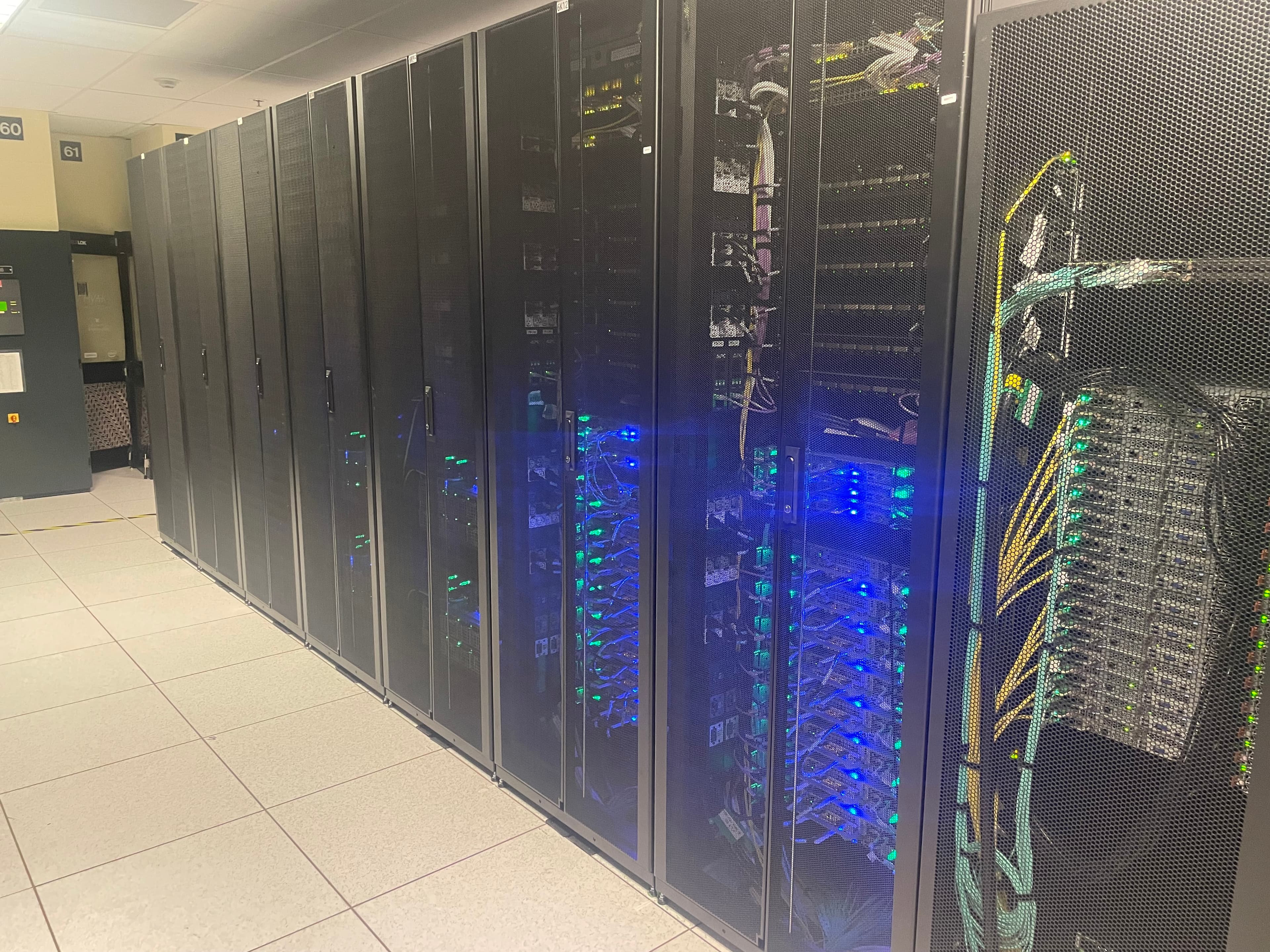
- University of Washington Research Computing — Tillicum GPU cluster architecture and cover image